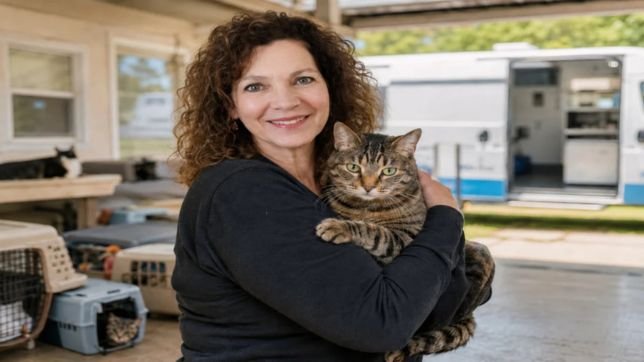

Animal welfare often brings to mind shelters, adoption events, and rescue organizations. Yet the most effective work frequently happens long before an animal enters a shelter. It begins with prevention, education, and access to affordable veterinary care.
That is where Donna Sicuranza has earned recognition. Through leadership, strategic communication, and community-focused programs, she has helped demonstrate that solving animal welfare challenges requires more than compassion. It demands systems that reach families before problems become crises.
This story is not simply about one nonprofit leader. It is about how thoughtful leadership, mobile veterinary services, and public education can reshape the future of animal welfare across entire communities.
Who Is Donna Sicuranza?
Donna Sicuranza is widely recognized for her leadership in animal welfare as Executive Director of Tait’s Every Animal Matters (TEAM), a Connecticut nonprofit dedicated to reducing pet overpopulation through affordable spay and neuter services, education, and community outreach.
Rather than focusing only on rescue, the organization emphasizes prevention. This philosophy recognizes that helping pet owners before animals become homeless creates longer-lasting results.
Related Topics
- Community animal welfare leadership
- Affordable spay and neuter programs
- Mobile veterinary clinics
- Connecticut nonprofit organizations
- Responsible pet ownership
Professional Snapshot
| Category | Details |
| Name | Donna Sicuranza |
| Position | Executive Director |
| Organization | Tait’s Every Animal Matters (TEAM) |
| Primary Focus | Animal welfare and population control |
| Core Strategy | Mobile spay and neuter clinics |
| Service Area | Connecticut |
| Mission | Prevent pet overpopulation through affordable care and education |
What Is Tait’s Every Animal Matters?
Tait’s Every Animal Matters, commonly known as TEAM, is a nonprofit organization committed to reducing pet overpopulation through accessible veterinary services.
Its work extends beyond surgery. The organization connects pet owners with affordable healthcare, educational resources, and responsible ownership guidance.
Instead of waiting for shelters to become overcrowded, TEAM works upstream by preventing unwanted litters before they occur.
Related Topics
- Preventive veterinary medicine
- Nonprofit animal organizations
- Community outreach
- Pet population management
- Responsible ownership education
Why the TEAM Mobile Clinic Model Matters
Traditional veterinary clinics remain essential, but they are not always accessible.
Transportation challenges, financial limitations, and geographic distance can prevent families from obtaining routine care for their pets.
Mobile clinics remove many of these barriers by bringing veterinary services directly into neighborhoods.
This approach changes an important equation. Instead of expecting communities to travel to care, care travels to communities.
That small shift often creates dramatic improvements in participation rates.
Structured Insight Table: How Mobile Spay and Neuter Supports Communities
| Benefit | Community Impact |
| Affordable procedures | More families access preventive care |
| Mobile locations | Removes transportation barriers |
| Reduced unwanted litters | Less shelter overcrowding |
| Education programs | Encourages responsible ownership |
| Preventive healthcare | Improves long-term animal health |
| Community partnerships | Expands outreach efforts |
| Early intervention | Reduces future rescue costs |
Donna Sicuranza’s Role as Executive Director
Leadership in nonprofit organizations involves much more than administration.
As Executive Director, Donna Sicuranza helps guide organizational strategy, build partnerships, support fundraising initiatives, oversee public outreach, and communicate the importance of preventive animal healthcare.
Strong leadership also requires translating complex community issues into practical solutions that volunteers, donors, veterinarians, and pet owners can understand.
That ability often determines whether a nonprofit simply survives or creates measurable change.
TEAM’s Mobile Model vs Traditional Veterinary Access
| Mobile Clinic | Traditional Clinic |
| Travels to neighborhoods | Fixed location |
| Greater accessibility | Requires transportation |
| Lower-cost preventive focus | Broader medical services |
| Community outreach | Appointment-based care |
| Ideal for underserved areas | Best for ongoing treatment |
Neither model replaces the other.
Instead, they complement one another by serving different needs within the veterinary care system.
Animal Welfare Beyond Adoption
Adoption receives significant public attention, yet prevention often creates even greater long-term impact.
Every prevented unwanted litter means fewer animals entering shelters.
Education about vaccinations, sterilization, nutrition, and responsible ownership improves outcomes for both pets and families.
Viewed this way, animal welfare becomes a public health issue as much as a rescue mission.
Strategic Importance of Communication
Many nonprofit initiatives succeed because people understand why they matter.
Clear communication helps communities recognize that affordable veterinary care benefits everyone.
It lowers shelter populations, improves animal health, reduces municipal costs, and strengthens the human-animal bond.
Stories, data, and local partnerships work together to build trust and encourage participation.
Risks and Trade-Offs in the Mobile Clinic Model
Mobile veterinary services offer many advantages, but they also present challenges.
Limited daily capacity means appointments may fill quickly.
Operating specialized vehicles requires ongoing maintenance and funding.
Weather conditions, staffing availability, and equipment logistics can affect scheduling.
Despite these trade-offs, many organizations find that increased accessibility outweighs operational complexity.
The Connecticut Context
Connecticut has developed a collaborative network of shelters, veterinarians, volunteers, and nonprofit organizations working toward shared animal welfare goals.
Programs emphasizing affordable preventive care have contributed to reducing pet overpopulation while improving access to veterinary services.
Community engagement remains one of the state’s strongest assets in supporting sustainable animal welfare initiatives.
Public Impact Since 1997
Since its founding in 1997, TEAM has focused on helping communities reduce pet overpopulation through preventive services.
Its work illustrates an important lesson.
Long-term progress often comes from consistent community investment rather than one-time rescue efforts.
Affordable sterilization programs, education campaigns, and partnerships create cumulative benefits that extend well beyond individual animals.
The Future of Donna Sicuranza’s Work and Animal Welfare in 2027
Looking toward 2027, organizations like TEAM are likely to combine mobile veterinary care with digital scheduling, expanded educational outreach, stronger community partnerships, and data-informed planning.
As animal welfare continues evolving, leaders such as Donna Sicuranza represent a broader shift toward prevention rather than reaction.
Future success will depend on balancing accessibility, financial sustainability, volunteer engagement, and technological innovation.
Takeaways
- Prevention is one of the most effective forms of animal welfare.
- Mobile veterinary clinics improve access for underserved communities.
- Affordable spay and neuter services reduce shelter overcrowding.
- Education strengthens responsible pet ownership.
- Strategic nonprofit leadership supports lasting community impact.
- Partnerships expand the reach of animal welfare programs.
Conclusion
Animal welfare succeeds when compassion is paired with practical solutions. Mobile veterinary care demonstrates how thoughtful planning can address problems before they grow into larger community challenges.
The work associated with Donna Sicuranza and TEAM illustrates that prevention, education, and accessibility are powerful tools for improving both animal lives and public well-being. As communities continue investing in proactive care, this model offers valuable lessons for nonprofits, policymakers, and pet owners alike.
Whether through mobile clinics, educational outreach, or collaborative partnerships, sustainable animal welfare begins long before an animal needs rescue.
FAQ
Q1. Who is Donna Sicuranza?
Answer: Donna Sicuranza is the Executive Director of Tait’s Every Animal Matters (TEAM), a Connecticut nonprofit focused on affordable spay and neuter services, community education, and reducing pet overpopulation.
Q2. What is Tait’s Every Animal Matters?
Answer: TEAM is a nonprofit organization dedicated to improving animal welfare through preventive veterinary care, mobile clinics, education, and affordable sterilization services.
Q3. Why are mobile veterinary clinics important?
Answer: Mobile clinics improve access to affordable veterinary services by bringing care directly into communities, especially for families facing transportation or financial barriers.
Q4. How does spay and neuter support animal welfare?
Answer: Spay and neuter programs help prevent unwanted litters, reduce shelter overcrowding, improve animal health, and support responsible pet ownership.
Q5. Why is prevention considered more effective than rescue alone?
Answer: Prevention addresses the root causes of pet overpopulation before animals enter shelters, creating long-term benefits for communities, shelters, and pet owners alike.