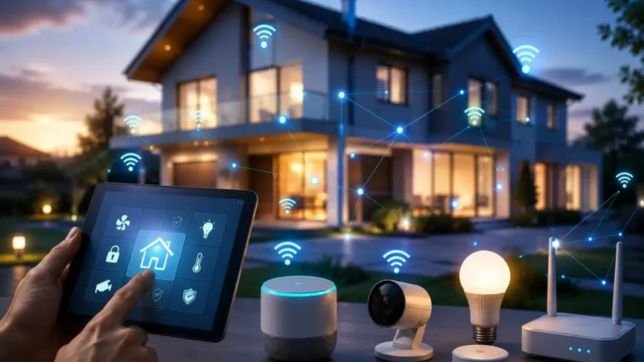

Technology rarely changes our lives overnight. Instead, it quietly reshapes everyday habits until yesterday’s routine feels outdated. Think about how Wi-Fi moved from being a luxury to becoming as essential as electricity. The same evolution is happening with smart home hardware, connected devices, and digital automation.
Domikyo.com represents this growing conversation around modern home technology by exploring practical hardware solutions, reliable connectivity, and intelligent integration. Rather than treating smart living as a futuristic dream, it focuses on making today’s technology understandable and useful for everyday households.
Whether you’re building your first smart home or upgrading an existing network, understanding the principles behind connected hardware helps you make smarter investments.
Understanding Modern Digital Connectivity
Digital connectivity is no longer limited to laptops and smartphones. Today’s homes include security cameras, smart speakers, lighting systems, thermostats, entertainment devices, and dozens of connected sensors.
These products all depend on one important factor: a stable and efficient network.
Without reliable hardware, even the smartest devices become frustrating to use. Strong connectivity creates an ecosystem where technology works together instead of competing for bandwidth.
Building Your Foundation with Domikyo.com
Every successful smart home begins with a reliable infrastructure.
That means selecting quality routers, understanding wireless coverage, positioning networking equipment correctly, and choosing compatible smart devices. Building from the ground up often prevents expensive upgrades later.
Instead of purchasing random gadgets, homeowners benefit from creating a long-term technology plan that grows alongside their needs.
Hardware Secrets Behind a Smarter Home
| Hardware Component | Primary Purpose | Benefit |
| Wi-Fi Router | Network management | Faster internet performance |
| Mesh Wi-Fi System | Extended coverage | Eliminates dead zones |
| Smart Hub | Device communication | Centralized automation |
| Smart Security Camera | Home monitoring | Improved safety |
| Smart Lighting | Automated lighting | Energy efficiency |
| Smart Thermostat | Climate control | Lower energy costs |
| Network Switch | Wired expansion | Stable device connections |
The strongest smart homes rarely rely on a single device. Instead, multiple components work together to create a seamless experience.
Optimizing Network Traffic for the Modern User
Network congestion is becoming increasingly common.
Streaming services, online gaming, remote work, video calls, and connected appliances all compete for internet resources simultaneously.
Managing this traffic requires thoughtful planning.
Practical Steps for a Seamless Setup
Several best practices improve overall performance:
- Position routers in central locations.
- Update firmware regularly.
- Separate guest devices from personal networks.
- Use wired connections whenever possible.
- Upgrade outdated networking hardware before adding more smart devices.
These relatively small adjustments often deliver significant improvements without increasing internet speed.
The Domikyo.com Approach to Smart Integration
One of the biggest challenges in home automation isn’t installing devices.
It’s making them work together.
Modern ecosystems should allow lighting, climate control, entertainment, and security systems to communicate efficiently. Compatibility becomes just as important as individual product quality.
The philosophy reflected by Domikyo.com encourages users to think beyond individual purchases and instead design an integrated digital environment that supports daily life.
Navigating the Pros and Cons of Automation
Automation offers remarkable convenience, but it also introduces new considerations.
Advantages
- Greater energy efficiency
- Improved home security
- Time-saving daily routines
- Better remote access
- Increased property value
Challenges
- Initial setup costs
- Learning curve
- Device compatibility issues
- Network dependency
- Privacy considerations
Understanding both sides helps homeowners make informed decisions rather than chasing every new gadget.
Domikyo.com Insights: Common Mistakes to Avoid
Many first-time smart home users repeat similar mistakes.
The most common error is buying multiple products without confirming ecosystem compatibility.
Another frequent issue involves ignoring network quality. Even premium devices perform poorly on weak wireless connections.
Homeowners also underestimate the importance of software updates, which often improve security, stability, and performance.
Planning before purchasing almost always leads to a smoother experience.
Practical Examples of Success
Imagine a typical weekday morning.
Your alarm turns off.
The bedroom lights gradually brighten.
The thermostat adjusts automatically.
Coffee begins brewing.
Security cameras switch to away mode once everyone leaves.
These actions may seem independent, but they’re coordinated through intelligent hardware and networking.
This type of integration demonstrates how thoughtful planning transforms individual devices into a connected living experience.
The Future of Living with Domikyo.com
Technology continues moving toward greater simplicity.
Artificial intelligence, edge computing, Wi-Fi advancements, and improved interoperability are making smart homes more accessible than ever before.
Future systems will likely require less manual configuration while offering stronger security, better energy management, and more personalized automation.
As hardware continues evolving, educational resources like Domikyo.com can help consumers understand emerging technologies before investing in new solutions.
Essential Insights Covered in This Guide
- Smart homes begin with strong networking.
- Reliable hardware improves every connected device.
- Automation works best with careful planning.
- Compatibility matters more than buying the newest gadget.
- Regular maintenance keeps systems secure and efficient.
In summary:
Smart home technology isn’t about filling a house with gadgets.
It’s about creating a connected environment that simplifies everyday life while improving comfort, efficiency, and security.
By understanding networking fundamentals, selecting compatible hardware, and planning for future growth, homeowners can build systems that remain useful for years rather than becoming outdated after a single upgrade.
Frequently Asked Questions Domikyo.com
Q1. What is Domikyo.com?
Answer: Domikyo.com focuses on topics related to digital connectivity, networking hardware, smart home technology, and modern automation, helping readers understand practical technology solutions.
Q2. Why is networking important for smart homes?
Answer: Every connected device depends on a reliable network. Strong Wi-Fi and quality hardware ensure better speed, stability, and communication between devices.
Q3. What hardware should beginners purchase first?
Answer: Start with a quality router or mesh Wi-Fi system, then gradually add compatible smart devices such as lighting, security cameras, or thermostats.
Q4. Are smart homes expensive to build?
Answer: Not necessarily. Many homeowners begin with a few essential devices and expand gradually as their needs and budgets grow.
Q5. How can I improve my home’s network performance?
Answer: Keep firmware updated, place routers centrally, reduce wireless interference, use wired connections when possible, and avoid overloading older networking equipment.
Conclusion Domikyo.com
Modern homes are becoming intelligent through thoughtful combinations of networking, automation, and reliable hardware. The goal isn’t simply adding more devices but creating systems that genuinely improve everyday living.
Whether you’re beginning your smart home journey or refining an existing setup, understanding the principles of connectivity and integration will help you make better long-term decisions. Stay informed, plan carefully, and embrace technology that works for you rather than the other way around.